Quick Answer
Patchy grass is typically caused by pest damage, fungal diseases, poor drainage, compacted soil, pet urine spots, irregular watering, or heavy foot traffic. Most patchy lawn issues stem from environmental stress or maintenance problems that weaken grass in specific areas[1]. The good news is that most causes are fixable with proper diagnosis and targeted treatment.
Key Takeaways
- Grubs, chinch bugs, and other pests create distinct brown patches that pull up easily
- Fungal diseases thrive in wet conditions and create circular or irregular dead spots
- Compacted soil and poor drainage prevent grass roots from getting necessary air and water
- Pet urine burns create characteristic yellow rings with green centers
- Consistent watering and proper lawn maintenance prevent most patchy grass problems
Introduction
Nothing's more frustrating than looking out at your lawn and seeing unsightly brown or bare patches scattered across what should be lush, green grass. While a patchy lawn might seem like a complex problem, the causes are usually straightforward – and so are the solutions.
Understanding what's behind those problem areas is the first step toward restoring your lawn's health. Let's explore the most common culprits and how to address each one effectively.
Common Causes of Patchy Grass
Pest Damage
Grubs are among the most destructive lawn pests, feeding on grass roots and creating patches that feel spongy underfoot[2]. Chinch bugs cause similar damage by sucking plant juices, typically creating irregular brown patches that spread outward. Army worms can devastate large areas quickly, especially during late summer.
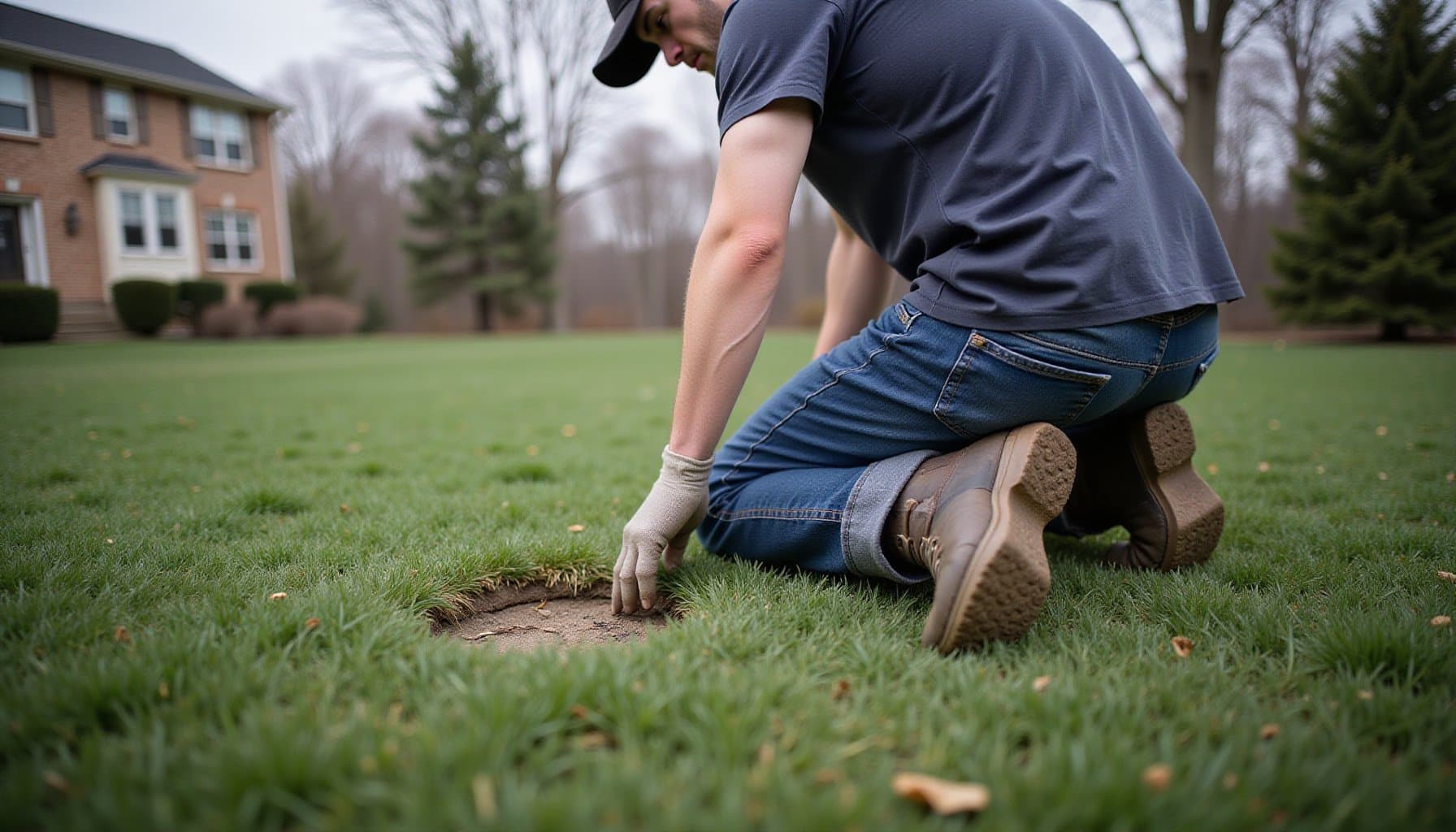
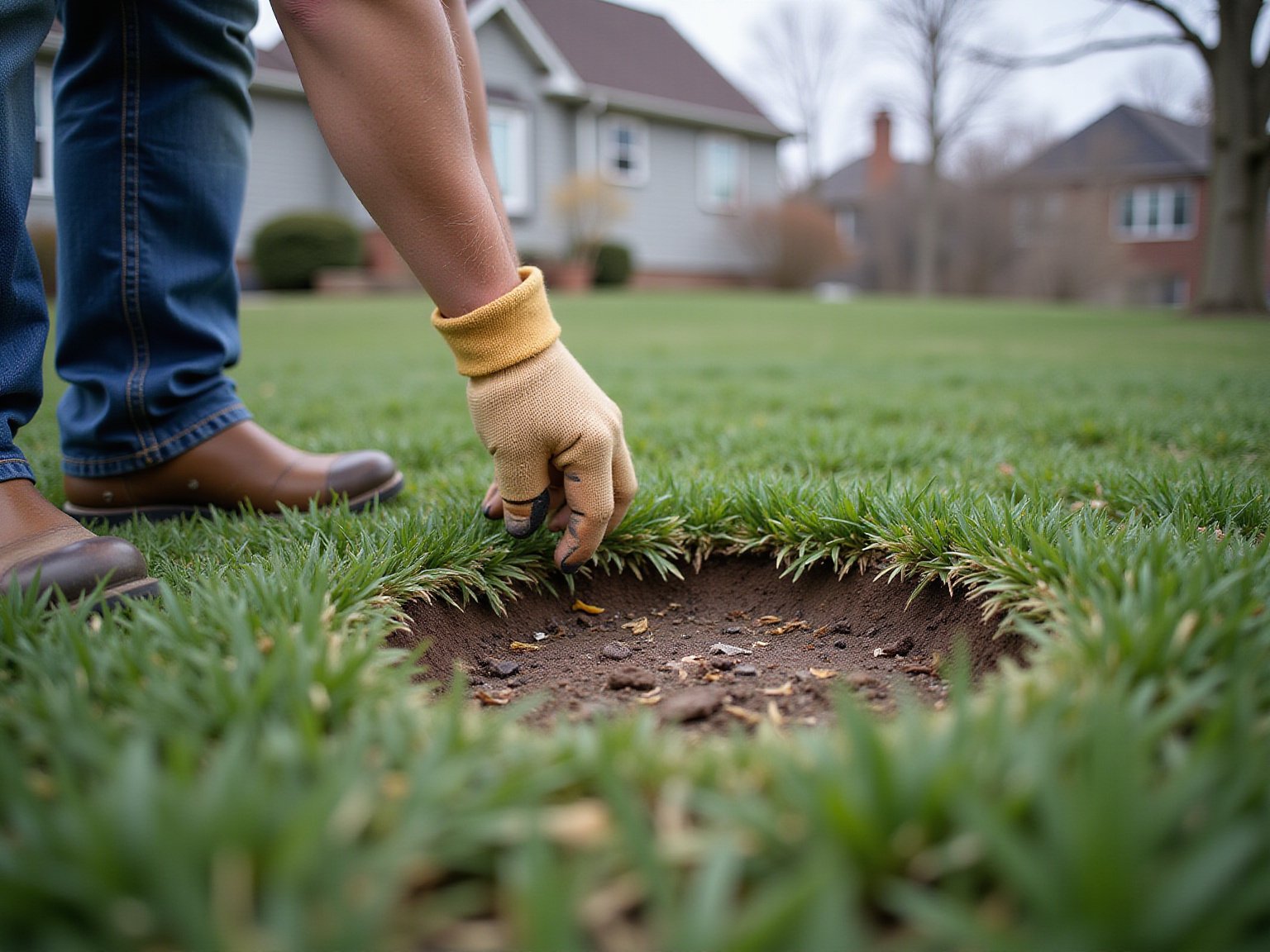
To test for grubs, try lifting affected grass – it should pull up easily like loose carpet if grubs are present. Look for white, C-shaped larvae in the soil beneath.
Fungal Diseases
Brown patch, dollar spot, and summer patch are common fungal diseases that create distinct patterns in your lawn[3]. These diseases flourish in humid conditions with poor air circulation, often appearing as circular brown areas with defined edges. Learn more about when to apply fungicide for effective treatment timing.
Fungal problems are most prevalent during warm, wet weather when grass stays moist for extended periods. Over-watering and evening irrigation can exacerbate these issues.
Soil and Drainage Issues
Compacted soil prevents water, air, and nutrients from reaching grass roots, leading to weak, patchy growth[1]. Heavy clay soils or areas with frequent foot traffic are particularly susceptible. Core aeration is the most effective fix for compacted soil.
Poor drainage creates waterlogged conditions that suffocate roots and promote disease. Low-lying areas or spots where water pools after rain are common problem zones.
How to Identify What's Causing Your Patches
Visual Inspection Signs
Start by examining the patch patterns. Circular patches often indicate fungal disease, while irregular brown areas suggest pest damage or environmental stress. Look for these telltale signs:
Pest damage: Patches pull up easily, visible insects or grubs in soil, damage spreads quickly
Disease: Defined circular patterns, fuzzy growth on grass blades, musty odors
Environmental stress: Patches in high-traffic areas, near walkways, or in poorly draining spots
Simple Tests You Can Do
Perform the "tug test" – healthy grass should resist pulling, while pest-damaged grass lifts easily. Check soil moisture by inserting a screwdriver; it should penetrate easily in properly hydrated soil[4].
For drainage issues, dig a small hole and fill it with water. If water sits for more than 24 hours, you have drainage problems.
When Problems Typically Appear
Grub damage peaks in late summer and fall when larvae are most active. Fungal diseases are worst during humid summer months. Pet damage and traffic wear occur year-round but are most noticeable during growing season[2].
Prevention and Treatment Solutions
Immediate Fixes
For pest problems, apply beneficial nematodes or appropriate insecticide according to package directions. Treat fungal issues with fungicide and improve air circulation by pruning nearby plants[3].
Address pet spots immediately by thoroughly watering the area to dilute urine concentration. For compacted areas, core aerate to improve soil structure. If water pools in patchy areas, you may have lawn drainage problems to address.
Long-term Prevention
Maintain a proper watering schedule — deep, infrequent watering early in the morning. This promotes strong root development while minimizing disease-friendly conditions[5].
Regular fertilization strengthens grass against pests and diseases. Overseed thin areas annually to maintain dense, competitive turf that resists problems.
Seasonal Considerations
Spring is ideal for addressing winter damage and applying pre-emergent herbicide treatments. Summer focus should be on proper watering and disease prevention. Fall is perfect for overseeding, fertilizing, and treating grub problems before winter[1].
Conclusion
Patchy grass problems rarely fix themselves, but they're usually manageable with the right approach. Start by identifying the specific cause through visual inspection and simple tests, then apply targeted treatments.
Your next steps should be: examine your patches closely, test for the most likely causes based on the patterns you see, and implement appropriate treatments. Remember that prevention through proper lawn care practices is always easier than treating problems after they develop. With consistent care and attention, you can restore your lawn to the lush, uniform carpet you want.
Sources
- Penn State Extension - Turfgrass diseases and soil management guidelines
2. University of Kentucky Extension - Lawn pest identification and integrated pest management
3. Rutgers University Extension - Turfgrass disease diagnosis and management
4. Scotts Miracle-Gro - Professional lawn care research and diagnostic guides
5. University of California Extension - Sustainable turfgrass management and irrigation practices
