This article contains affiliate links. If you purchase through these links, we may earn a small commission at no extra cost to you.
Quick Answer
The most common lawn care mistakes include overwatering, cutting grass too short, applying fertilizer at the wrong time, and neglecting soil health. These errors can lead to weak grass, increased disease susceptibility, and poor root development that undermines your lawn's long-term health.
Key Takeaways
- Watering deeply but less frequently promotes stronger root systems than daily shallow watering
- Never cut more than one-third of grass blade length in a single mowing session
- Fertilizer timing matters more than frequency - spring and fall applications are most effective
- Soil testing reveals pH and nutrient deficiencies that affect grass health
- Sharp mower blades prevent disease and stress damage to grass plants
Introduction
A beautiful lawn doesn't happen by accident, but many well-intentioned homeowners unknowingly sabotage their grass with common care mistakes. From weekend warriors who scalp their lawns to over-enthusiastic waterers who drown their grass roots, these errors can turn your green oasis into a patchy disappointment. Understanding and avoiding these pitfalls will save you time, money, and frustration while giving you the healthy lawn you want.
The Most Damaging Lawn Care Mistakes
Overwatering and Poor Watering Practices
Overwatering ranks as the number one lawn killer among homeowners[1]. Daily light watering creates shallow root systems that can't survive drought or stress. Instead, follow a proper lawn watering schedule — water deeply 2-3 times per week, applying about 1 inch total including rainfall[2].
Watering at the wrong time compounds the problem. Evening watering leaves grass wet overnight, creating perfect conditions for fungal diseases[1]. Water early morning (6-10 AM) for best results.
Cutting Grass Too Short (Scalping)
Scalping weakens grass by removing too much leaf surface needed for photosynthesis[3]. Never remove more than one-third of the blade length in a single cut. For most grass types, maintain heights of 2.5-3.5 inches, which promotes deeper roots and crowds out weeds naturally[2].
Using Dull Mower Blades
Dull blades tear grass instead of cutting cleanly, creating brown, frayed tips that invite disease[3]. Sharpen blades at least once per season, or twice if you mow frequently. Clean cuts heal faster and look better.
How to Identify and Fix These Problems
Visual Signs Your Lawn is in Trouble
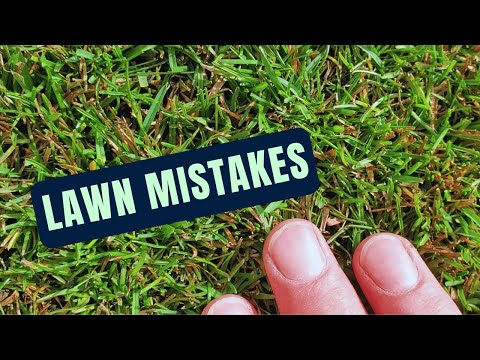
Brown patches often indicate overwatering and fungal issues, while thin, sparse areas suggest scalping damage[4]. Yellow grass tips signal dull mower blades, and weedy areas typically mean the grass is too stressed to compete effectively.
Poor drainage creates soggy spots and moss growth, while compacted soil leads to water runoff and weak grass establishment[1].
Quick Fixes You Can Implement Today
Adjust your mower height immediately - raise it to at least 3 inches for most grass types[2]. Check your [sprinkler](https://www.amazon.com/s?k=oscillating+lawn+sprinkler+adjustable&tag=amazonlinkp00-20) timing and reduce frequency while increasing duration. Sharpen or replace mower blades before your next cut.
Test soil moisture by inserting a screwdriver 6 inches deep. If it goes in easily, skip watering that day[5].
Fertilizing and Seasonal Care Mistakes
Wrong Timing and Over-Fertilizing
Applying fertilizer during hot summer months stresses cool-season grasses and can burn warm-season varieties[2]. Understanding how often to fertilize your lawn and choosing the best time to mow relative to feeding prevents most timing errors. Focus on spring and fall applications when grass actively grows. Over-fertilizing creates excessive top growth at the expense of root development.
Skipping soil tests means you're guessing at your lawn's needs. Test every 2-3 years to determine pH levels and nutrient deficiencies[4].
Ignoring Seasonal Requirements
Fall preparation mistakes cost you next spring's success. Continue mowing until grass stops growing, but lower the final cut slightly to prevent snow mold[5]. Apply winterizer fertilizer 6-8 weeks before first frost for root strengthening.
Spring mistakes include cutting too early when soil is soft, which causes compaction and root damage[3].
Soil Health and Maintenance Oversights
Compaction and Aeration Neglect
Compacted soil prevents water, air, and nutrients from reaching roots[4]. High-traffic areas need annual core aeration, while entire lawns benefit from aeration every 2-3 years. Fall aeration works best for cool-season grasses.
pH and Nutrient Imbalances
Most grasses prefer slightly acidic soil (pH 6.0-7.0)[2]. Extreme pH levels lock up nutrients even when they're present in soil. Lime raises pH while sulfur lowers it, but changes take months to show effects.
Neglecting organic matter reduces soil biology and water retention. Add compost annually and leave grass clippings on the lawn unless they're excessive[5].
Conclusion
Avoiding these common lawn care mistakes starts with understanding your grass's basic needs: proper watering depth and timing, correct mowing height, sharp cutting tools, and appropriate seasonal care[1][3]. Test your soil this season, adjust your mower height, and establish a deep watering schedule. These simple changes will dramatically improve your lawn's health and appearance while reducing long-term maintenance headaches. Remember, consistency beats intensity in lawn care - steady, proper practices always outperform sporadic intensive efforts.
Sources
- University of Minnesota Extension - Lawn watering and disease prevention guidelines
2. Purdue University Extension - Turfgrass management and fertilization practices
3. North Carolina State Extension - Proper mowing techniques and equipment maintenance
4. Penn State Extension - Soil testing and lawn problem diagnosis
5. University of Illinois Extension - Seasonal lawn care and soil health management