

Quick Answer
The best time to dethatch your lawn depends on your grass type: cool-season grasses should be dethatched in early fall (September-October) or early spring, while warm-season grasses are best dethatched in late spring to early summer when actively growing. Always dethatch when your grass is healthy and growing vigorously to ensure quick recovery.
Key Takeaways
- Cool-season grasses: Dethatch in early fall (preferred) or early spring
- Warm-season grasses: Dethatch in late spring to early summer
- Only dethatch when thatch layer exceeds ½ inch thickness
- Avoid dethatching during drought, disease, or stress periods
- Plan to overseed immediately after dethatching for best results
Dethatching is one of the most beneficial yet misunderstood lawn care practices. While many homeowners know they should remove excess thatch, timing this aggressive treatment incorrectly can seriously damage your lawn. Our guide on how often to dethatch your lawn helps you determine whether your lawn actually needs it. Understanding when your specific grass type grows most actively is crucial for successful dethatching results.
Understanding Thatch and When to Remove It
Thatch is the layer of dead grass stems, roots, and debris that accumulates between the soil surface and green grass blades[1]. A thin thatch layer (¼ inch or less) actually benefits your lawn by retaining moisture and providing insulation. However, when thatch exceeds ½ inch, it creates problems by blocking water, air, and nutrients from reaching grass roots[2].
To check your thatch thickness, cut a small wedge from your lawn and measure the brown layer between the soil and green grass. If it's thicker than ½ inch, dethatching will improve your lawn's health significantly.
How to Dethatch Your Lawn: Step-by-Step Process
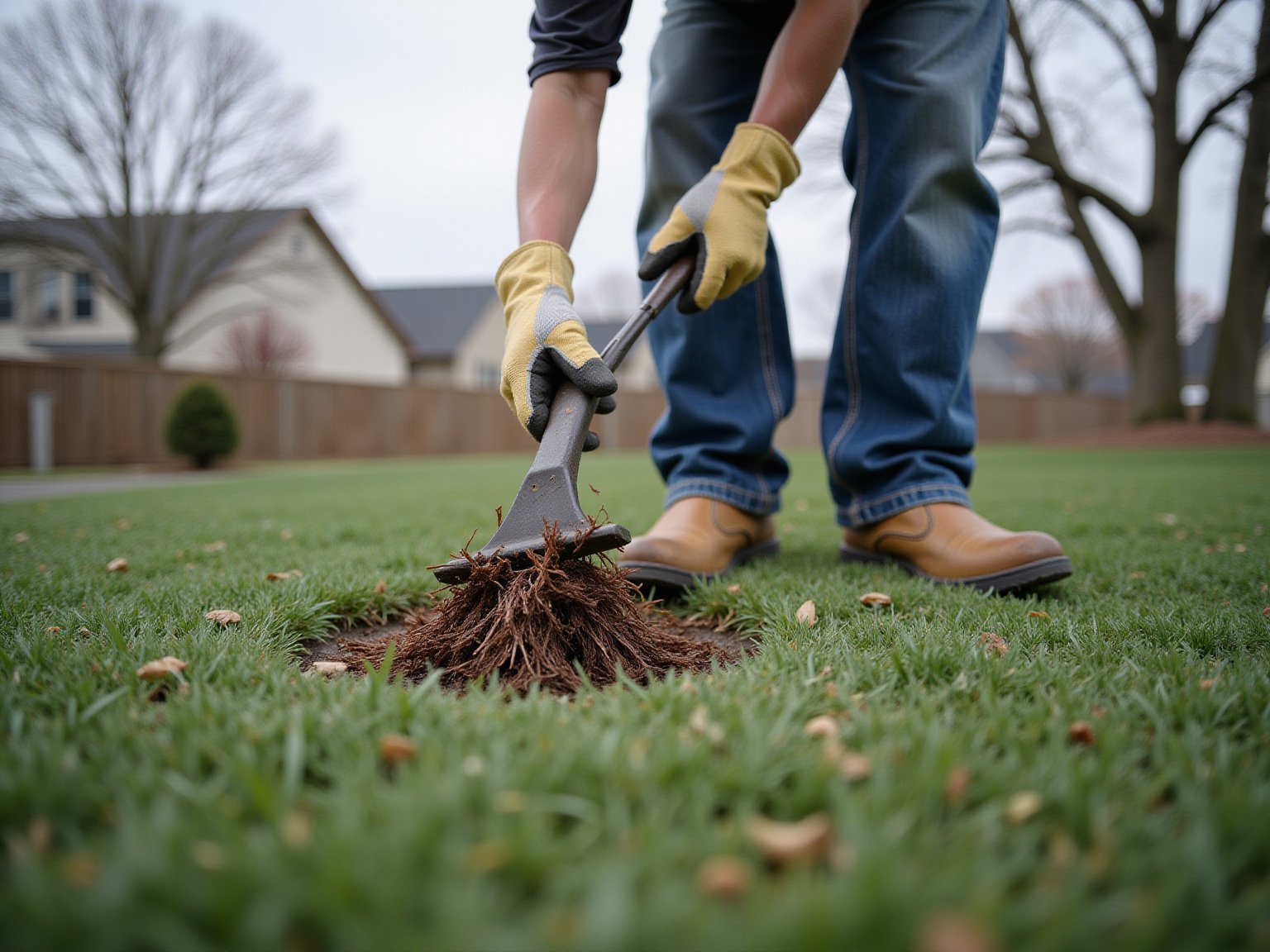
Successful dethatching requires the right tools and technique. For small areas under 2,500 square feet, a dethatching rake works well, though it requires significant physical effort. For larger lawns, rent a power dethatcher (also called a vertical mower) from your local equipment rental center[3].
Start by mowing your lawn shorter than usual—about half your normal cutting height. Water the lawn lightly if the soil is dry, but avoid dethatching soggy ground. Run the dethatcher in one direction across your entire lawn, then make a second pass perpendicular to the first for thorough thatch removal[4].
After dethatching, rake up the removed thatch debris—you'll be surprised how much material comes up from a healthy-looking lawn. This is also the perfect time to aerate your lawn and overseed thin areas, as both processes create ideal seed-to-soil contact.
Seasonal Timing for Different Grass Types
Cool-Season Grasses (Fescue, Bluegrass, Ryegrass)
Cool-season grasses grow most actively during fall and spring when temperatures range from 60-75°F. Early fall (September to early October) is the ideal dethatching window because these grasses are entering their peak growing season[1]. This timing allows 6-8 weeks of active growth before winter dormancy.
Early spring dethatching (March-April) is your second-best option, but avoid this timing if you plan to apply pre-emergent herbicides, as dethatching can disrupt the herbicide barrier.
Warm-Season Grasses (Bermuda, Zoysia, St. Augustine)
Warm-season grasses thrive in summer heat and should be dethatched during their active growing period from late spring through early summer[2]. The best window is typically May through June, depending on your climate zone.
Never dethatch warm-season grasses during their dormant period (late fall through early spring), as they cannot recover quickly from this aggressive treatment when not actively growing.
Common Timing Mistakes to Avoid
Many homeowners make the mistake of dethatching based on calendar dates rather than grass condition and weather patterns. Never dethatch during drought stress, disease outbreaks, or when your lawn is already struggling[5].
Avoid dethatching newly established lawns less than one year old, as their root systems aren't developed enough to handle the stress. Similarly, don't dethatch if your lawn has less than ½ inch of thatch—you'll do more harm than good.
Weather timing matters too. Consider whether to dethatch before or after rain for best results. Choose a period when you can water regularly for 2-3 weeks after dethatching, and avoid dethatching right before expected temperature extremes or extended dry periods.
Conclusion
Timing your dethatching correctly makes the difference between a lawn that bounces back beautifully and one that struggles for months. Remember: cool-season grasses in early fall, warm-season grasses in late spring to early summer, and always when your grass is actively growing and healthy. After dethatching, maintain consistent watering and consider overseeding to maximize your results. Your lawn will reward proper timing with thicker, healthier growth that better resists weeds and drought stress.
Sources
- Penn State Extension - Turfgrass thatch management and dethatching guidelines
2. Texas A&M AgriLife Extension - Warm-season grass maintenance and dethatching practices
3. Scotts Miracle-Gro - Professional lawn care equipment and dethatching research
4. University of Minnesota Extension - Lawn dethatching techniques and seasonal timing
5. Turfgrass Producers International - Industry best practices for lawn maintenance and dethatching
