
Quick Answer: Pennsylvania's spring lawn care starts in late March with pre-emergent applications, followed by first mowing in April when soil temperatures reach 50°F. Focus on fertilizing Kentucky Bluegrass and Tall Fescue lawns in April-May, addressing winter damage, and preparing cool-season grasses for Pennsylvania's humid continental climate.
Key Takeaways
- Apply pre-emergent crabgrass control in late March to early April when forsythia blooms
- Start mowing in April when grass reaches 3-4 inches, cutting cool-season varieties to 2.5-3 inches
- Fertilize established lawns in late April through May using slow-release nitrogen formulations
- Address snow mold damage common in Pennsylvania's snowy winters with light raking
- Plan major lawn renovations for fall when cool-season grasses thrive in Pennsylvania's climate
Pennsylvania homeowners face unique challenges with spring lawn care in Pennsylvania due to the state's humid continental climate and cool-season grass dominance[1]. With USDA zones ranging from 5b in the mountains to 7a in southeastern regions, timing becomes critical for successful lawn establishment. The transition from Pennsylvania's cold, snowy winters (averaging 22°F lows) to warm summers requires strategic spring preparation for Kentucky Bluegrass, Tall Fescue, and Perennial Ryegrass lawns.
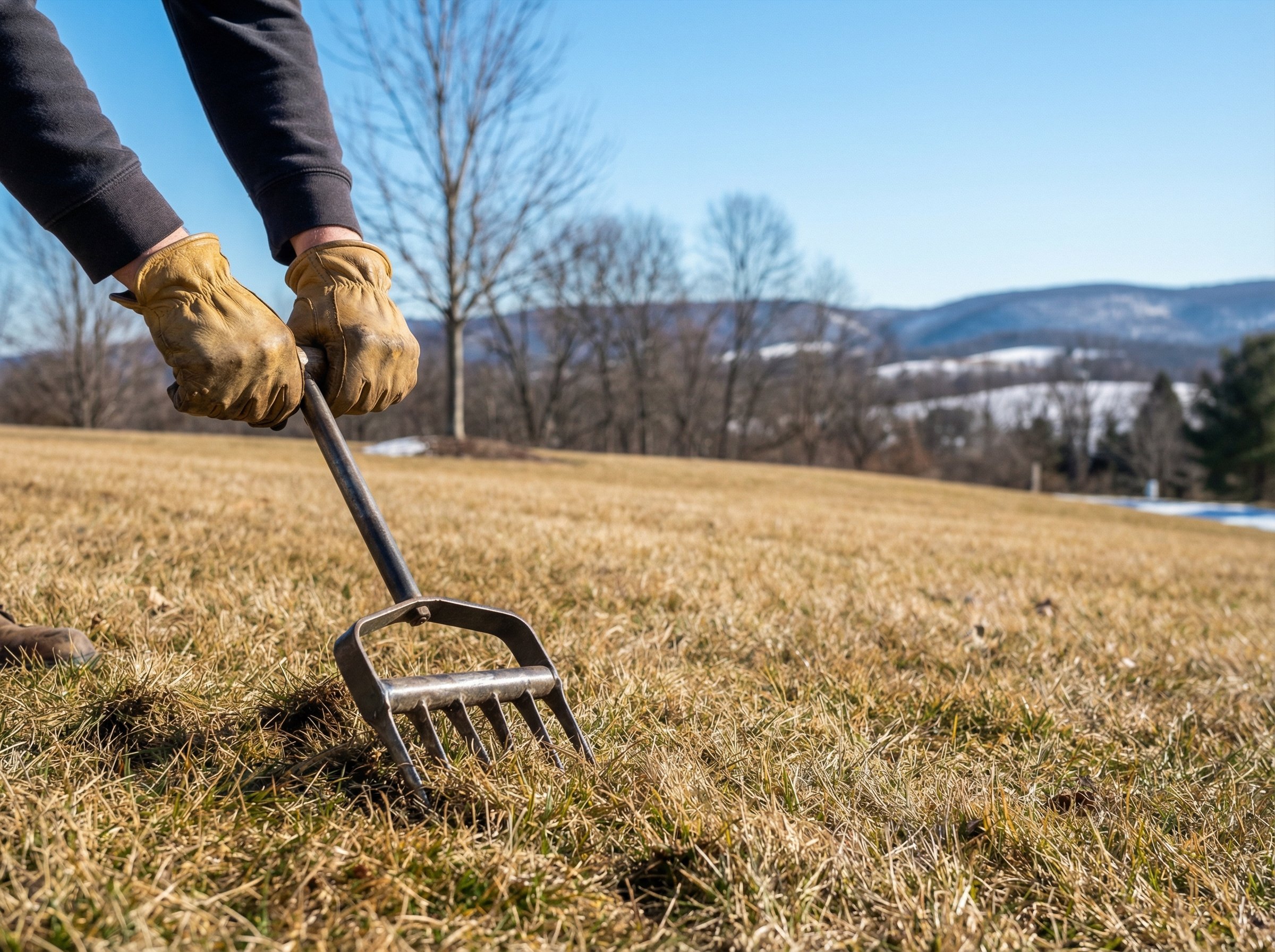
When Should I Start Spring Lawn Care in Pennsylvania?
Pennsylvania's spring lawn care calendar begins when soil temperatures consistently reach 50°F, typically in late March to early April depending on your specific zone[2]. Extension experts recommend using forsythia bloom as a natural indicator for pre-emergent herbicide timing, which coincides with crabgrass germination conditions[3].
Start with these essential spring tasks:
- Late March: Apply pre-emergent herbicide before soil temperatures reach 55°F
- Early April: Begin light raking to address snow mold damage from Pennsylvania winters
- Mid-April: Start regular mowing when grass reaches 3-4 inches in height
- Late April-May: Apply first fertilizer application to established cool-season lawns
Pennsylvania's variable spring weather means flexibility in timing is crucial. Mountain regions in zones 5b may lag 2-3 weeks behind southeastern areas in zone 7a[4].
What Spring Fertilizer Program Works Best for Pennsylvania Lawns?
Cool-season grasses dominating Pennsylvania landscapes require different nutrition timing compared to warm-season varieties. Kentucky Bluegrass and Tall Fescue benefit most from spring fertilization when active growth begins in April[5].
Apply a slow-release nitrogen fertilizer with these specifications:
- N-P-K ratio: 3-1-2 or 4-1-2 for established lawns
- Application rate: 0.5-1 pound nitrogen per 1,000 square feet
- Timing: Late April through May when soil temperature exceeds 55°F
- Frequency: Single spring application for established lawns, with main feeding in fall
Avoid heavy nitrogen applications in late spring, as this can promote summer stress in Pennsylvania's humid conditions and increase susceptibility to brown patch disease, common in the state's moderate to high humidity environment[6]. Instead, focus on fall fertilization when cool-season grasses naturally peak in growth.
How Do I Address Winter Damage and Prepare for Pennsylvania Pests?
Pennsylvania's snowy winters often leave lawns with snow mold damage, while the humid climate creates perfect conditions for specific pest and disease issues[1]. Address winter damage first before implementing preventive measures.
Winter Damage Recovery
Snow mold appears as circular, matted patches where snow accumulated longest. Gently rake affected areas to restore air circulation and allow new growth[2]. Most Kentucky Bluegrass and Perennial Ryegrass will recover naturally as temperatures warm.
For bare spots larger than 6 inches:
- Lightly scratch soil surface
- Apply starter fertilizer
- Overseed with matching grass type
- Keep moist until germination (typically 2-3 weeks for cool-season varieties)
Pest and Disease Prevention
Pennsylvania lawns face specific challenges requiring targeted spring prevention:
White Grubs: Apply beneficial nematodes in May when soil temperatures reach 60°F, targeting the most damaging pest in Pennsylvania turf[7].
Crabgrass Control: Pre-emergent herbicide application in late March prevents this persistent weed that thrives in Pennsylvania's humid summers[3].
Brown Patch Prevention: Improve air circulation through proper mowing height (2.5-3 inches for cool-season grasses) and avoid evening watering that promotes fungal development in humid conditions[6].
What Mowing and Maintenance Schedule Should Pennsylvania Homeowners Follow?
Proper spring mowing sets the foundation for healthy Pennsylvania lawns throughout the growing season. Cool-season grasses require specific height management to handle the state's climate extremes[8].
Mowing Guidelines
- First mow: April, when grass reaches 3-4 inches
- Cutting height: 2.5-3 inches for Kentucky Bluegrass and Perennial Ryegrass; 3-4 inches for Tall Fescue
- Frequency: Weekly during peak spring growth (May-June)
- Blade maintenance: Sharpen mower blades before first cut to prevent disease entry points
Never remove more than one-third of grass blade length in a single mowing, especially important for Pennsylvania's cool-season varieties that can stress quickly during humid summer transitions[2].
Watering Preparation
Pennsylvania receives an average of 42 inches of annual rainfall, but spring establishment requires supplemental irrigation[4]. Set up irrigation systems for:
- Deep, infrequent watering: 1-1.5 inches weekly including rainfall
- Early morning timing: 6-10 AM to minimize fungal disease risk
- Soil monitoring: Check moisture 3-4 inches deep before watering
Pennsylvania homeowners should prioritize spring lawn preparation that supports cool-season grass health through the challenging humidity and temperature fluctuations ahead. Focus on proper timing for your specific zone, address winter damage promptly, and establish maintenance routines that prevent common Pennsylvania lawn problems. Success in spring creates the foundation for a resilient lawn that can handle the state's demanding summer conditions[5].
Sources
- Penn State Extension - Comprehensive turfgrass management and seasonal care guidelines
2. Cornell Cooperative Extension - Cool-season grass maintenance and winter damage recovery
3. Scotts Miracle-Gro - Professional lawn care timing and herbicide application research
4. USDA Natural Resources Conservation Service - Regional climate data and growing zone information
5. University of Massachusetts Extension - Turfgrass fertilization programs for Northeast climates
6. Professional Landcare Network - Disease management and humidity-related lawn care practices
7. Pennington Seed - Integrated pest management and beneficial nematode applications
8. Lawn Institute - Mowing height recommendations and maintenance schedules