

Quick Answer
Spring lawn care in North Carolina requires different approaches for cool-season grasses like tall fescue (fertilize in March) versus warm-season grasses like bermudagrass and zoysiagrass (wait until May). The key is applying pre-emergent herbicides in February-March before soil temperatures reach 55°F, then timing your fertilization and mowing based on your specific grass type in North Carolina's transition zone climate.
Key Takeaways
- Apply pre-emergent herbicides in February-March to prevent crabgrass in North Carolina's humid climate
- Cool-season grasses (fescue) need early spring fertilization in March, warm-season grasses wait until May
- Start mowing cool-season lawns in February, warm-season grasses in March when they break dormancy
- North Carolina's transition zone climate requires grass-specific timing for optimal results
- Address winter damage early with targeted reseeding for thin spots
Spring lawn care in North Carolina's unique transition zone climate presents specific challenges for homeowners[1]. With USDA hardiness zones ranging from 6a in the mountains to 8b in the eastern regions, homeowners must navigate between cool-season and warm-season grass management strategies. The state's humid subtropical climate, averaging 46 inches of annual rainfall, creates ideal conditions for both beneficial growth and problematic weeds and diseases[2].
What Should I Do First for Spring Lawn Care in North Carolina?
Your first priority should be applying pre-emergent herbicides before soil temperatures consistently reach 55°F, typically in February to early March across North Carolina[3]. This timing is critical because North Carolina's humid climate and moderate temperatures create perfect conditions for crabgrass germination.
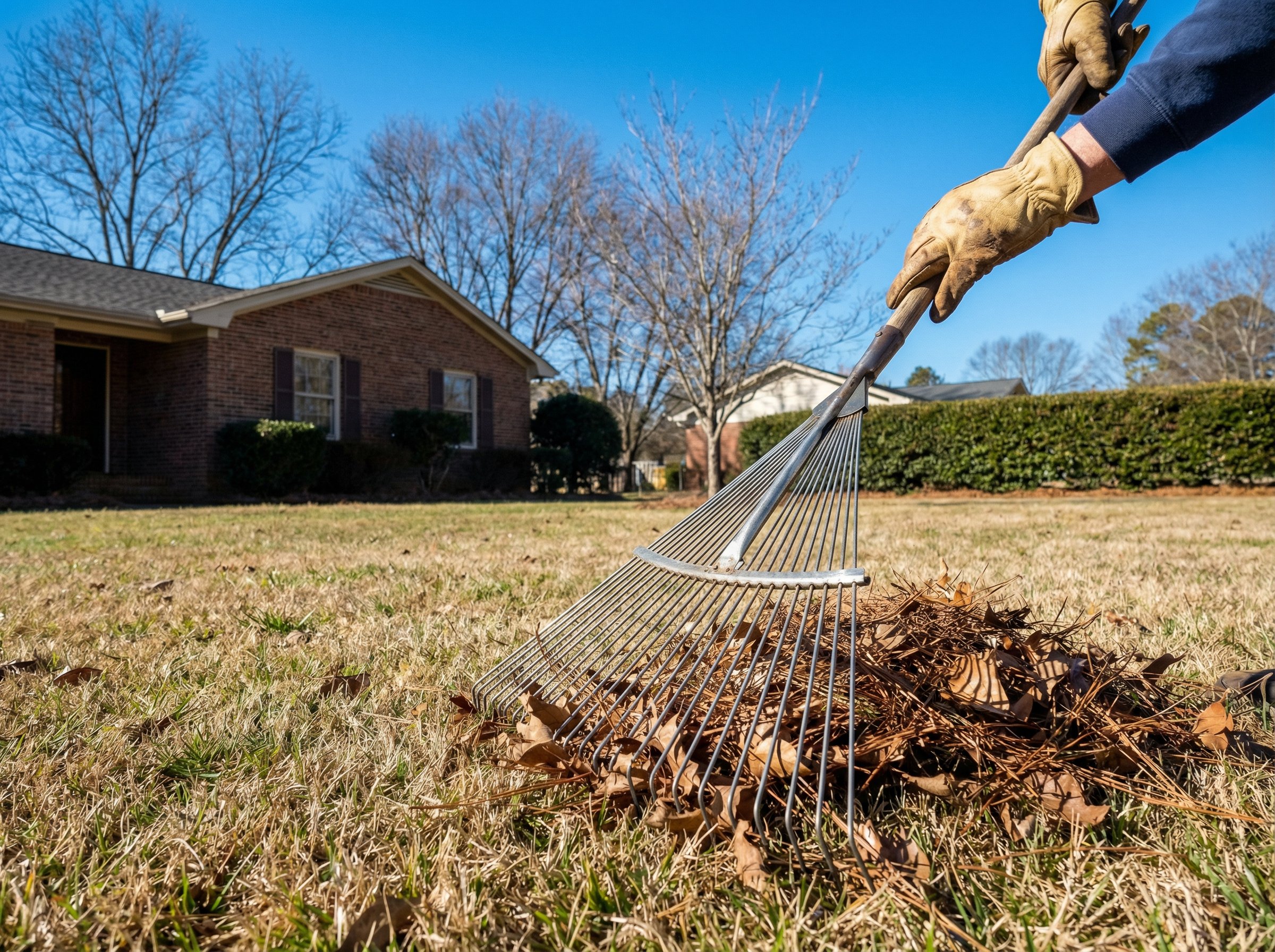
Start by cleaning up winter debris and inspecting your lawn for damage. Look for areas where your tall fescue, bermudagrass, or zoysiagrass may have thinned due to winter stress or disease. Brown patch and other fungal diseases are common in North Carolina's humid conditions, so early identification helps prevent spread[4].
For cool-season grasses like tall fescue and Kentucky bluegrass, begin your first light fertilization in March when soil temperatures reach 50°F[1]. However, if you have warm-season grasses like bermudagrass, zoysiagrass, or centipedegrass (common in eastern North Carolina), wait until May when they fully break dormancy.
When Should I Start Mowing My North Carolina Lawn?
Mowing schedules in North Carolina depend entirely on your grass type. Cool-season grasses like tall fescue can be mowed as early as February when growth resumes, while warm-season grasses shouldn't be mowed until March or even April when they begin actively growing[5].
For tall fescue lawns, which dominate much of North Carolina, start mowing when grass reaches 4 inches in height, cutting back to 3 inches. This higher cutting height helps the grass compete against weeds and tolerate North Carolina's summer heat stress[6]. Never remove more than one-third of the grass blade at once.
Bermudagrass and zoysiagrass lawns should be mowed shorter, typically to 1-2 inches, but only after they've fully greened up. Mowing dormant warm-season grass can damage crowns and delay spring recovery. Wait until soil temperatures consistently reach 65°F before aggressive mowing of warm-season varieties[3].
How Do I Fertilize Different Grass Types in North Carolina?
North Carolina's diverse grass types require different fertilization strategies. Cool-season grasses need their primary feeding in early spring, while warm-season grasses should wait until late spring[1][7].
For tall fescue lawns, apply a balanced fertilizer (like 16-4-8 or similar) in March when soil temperatures reach 50°F. Tall fescue thrives in North Carolina's climate but needs steady nutrition through the growing season[8]. Follow up with additional applications in May and September for optimal health.
Warm-season grasses like bermudagrass and zoysiagrass should receive their first fertilization in May, after they've fully broken dormancy. These grasses are more heat-tolerant but can be damaged by early fertilization that encourages growth before soil temperatures stabilize[1].
Centipedegrass, common in eastern North Carolina's sandy soils, requires minimal fertilization. Over-fertilizing centipedegrass can cause more harm than good, leading to thatch buildup and disease susceptibility in North Carolina's humid conditions[4].
What Pests and Diseases Should I Watch For?
Spring in North Carolina brings specific pest and disease challenges that vary by region. White grubs become active as soil temperatures warm, particularly problematic for lawns that suffered fall armyworm damage the previous year[9]. Eastern North Carolina homeowners should also monitor for mole crickets, which thrive in the region's sandy soils.
Brown patch disease is especially problematic in North Carolina's humid spring conditions, particularly affecting tall fescue lawns[4]. This fungal disease appears as circular brown patches and spreads rapidly in temperatures between 70-85°F with high humidity. Improve air circulation by pruning nearby shrubs and avoid evening watering to reduce disease pressure.
Dollar spot commonly affects bermudagrass and zoysiagrass in North Carolina, appearing as small, silver-dollar-sized brown spots[10]. This disease thrives in the state's moderate spring temperatures and high humidity levels. Proper fertilization and morning watering help prevent dollar spot infections.
Spring is also prime time for addressing winter annual weeds like henbit and chickweed before they set seed. Post-emergent herbicides work best when these weeds are actively growing but haven't yet flowered[3].
Conclusion
Successful spring lawn care in North Carolina requires understanding your specific grass type and timing applications according to the state's transition zone climate. Start with pre-emergent herbicides in February-March, then follow grass-specific fertilization and mowing schedules. Cool-season grasses need early attention in March, while warm-season varieties should wait until May for major inputs. Monitor for North Carolina's common pests and diseases, and adjust your care program based on your specific location within the state's diverse climate zones. For detailed soil testing and specific recommendations, contact your local NC State Extension office.
Sources
- NC State Extension - Turfgrass management and fertilization guidelines for North Carolina
2. National Weather Service - North Carolina climate data and growing conditions
3. University of Georgia Extension - Pre-emergent herbicide timing and weed control in the Southeast
4. Virginia Tech Extension - Turfgrass disease management in humid climates
5. Clemson University Extension - Seasonal lawn care schedules for transition zones
6. Scotts Lawn Care - Professional mowing height recommendations by grass type
7. University of Tennessee Extension - Fertilizer application timing for cool and warm season grasses
8. Pennington Seed - Tall fescue care and nutrition requirements
9. USDA Natural Resources Conservation Service - Integrated pest management for turfgrass
10. Texas A&M AgriLife Extension - Dollar spot disease identification and control
