

Quick Answer: North Carolina lawns face unique challenges due to the state's transition zone climate, including brown patch disease in humid summers, fall armyworm infestations, crabgrass invasions, and stress from temperature fluctuations that affect both warm-season grasses like Bermudagrass and cool-season varieties like tall fescue.
Key Takeaways:
- Brown patch disease thrives in NC's humid summers, particularly affecting tall fescue lawns
- Fall armyworms can devastate lawns in late summer, especially Bermudagrass and Zoysiagrass
- Crabgrass prevention requires February-March pre-emergent applications before soil temperatures reach 55°F
- Transition zone stress affects both warm and cool-season grasses during temperature swings
- White grubs cause significant damage from August through October across all NC grass types
North Carolina's unique position in the transition zone creates a perfect storm of lawn care challenges. The state's humid subtropical climate in the east and cooler mountain conditions in the west, combined with four distinct seasons and 46 inches of annual rainfall, create conditions where both warm and cool-season grass diseases and pests can thrive[1].
What Diseases Most Commonly Affect North Carolina Lawns?
Brown patch disease stands as the most destructive lawn disease across North Carolina, particularly during the humid summer months when temperatures hover around 88°F with high moisture levels[2]. This fungal disease creates circular brown patches that can rapidly expand, especially in tall fescue lawns that dominate much of the state.
Dollar spot appears as small, silver-dollar-sized brown spots and becomes problematic when nitrogen levels are low and humidity is high. This disease affects all major NC grass types but is particularly troublesome in Zoysiagrass and Kentucky bluegrass lawns[1].
Pythium blight, often called "grease spot," occurs during hot, humid periods with poor air circulation. The disease can kill large areas of grass within 24-48 hours, making it one of the most feared lawn diseases in North Carolina's climate.
Spring dead spot specifically targets Bermudagrass lawns, creating circular dead patches that appear as the grass emerges from winter dormancy. This disease is particularly problematic in central and western North Carolina where Bermudagrass is common[3].
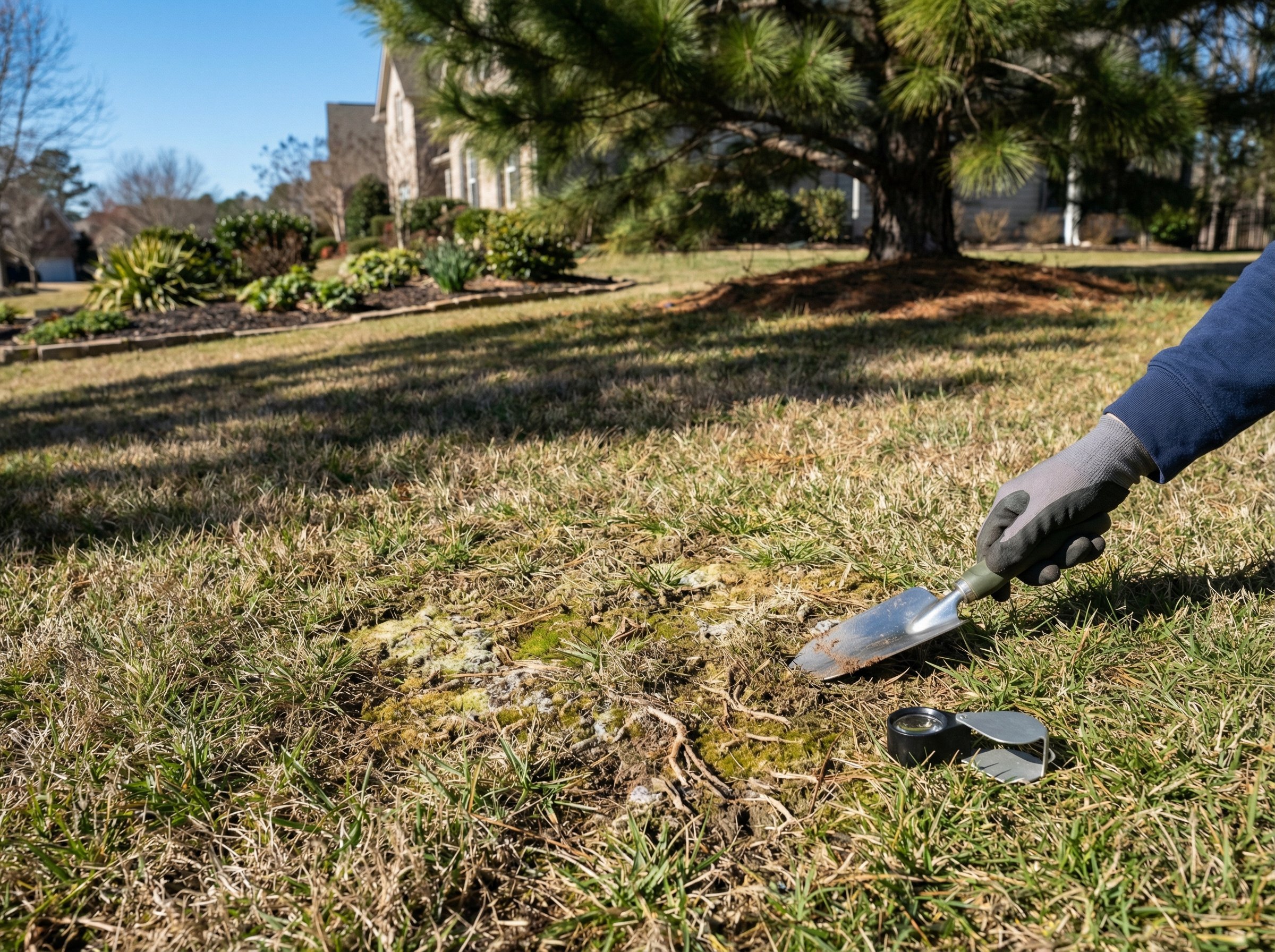
Which Pests Cause the Most Lawn Damage in North Carolina?
Fall armyworms represent the most devastating pest threat to North Carolina lawns, capable of destroying entire lawns within days during late summer infestations[4]. These caterpillars prefer warm-season grasses but will attack any available turf when populations are high.
White grubs cause extensive root damage from August through October, with peak damage visible in early fall when adult beetles emerge. These C-shaped larvae feed on grass roots, creating brown patches that peel away like loose carpet[1].
Mole crickets primarily affect eastern North Carolina lawns, tunneling through soil and creating raised ridges while feeding on grass roots and shoots. These pests are particularly problematic in sandy soils common along the coastal plain.
Chinch bugs become active during hot, dry periods, injecting toxins while feeding that cause grass to yellow and die. They're especially damaging to St. Augustinegrass and centipedegrass in eastern NC.
Billbugs attack grass stems and crowns, with adult weevils laying eggs in grass stems during spring. The resulting larvae tunnel through stems and roots, causing widespread damage particularly in tall fescue lawns[5].
How Do I Control Weeds in North Carolina Lawns?
Crabgrass prevention requires precise timing in North Carolina's climate zones 6a-8b. Apply pre-emergent herbicides in February through early March, before soil temperatures consistently reach 55°F[1]. This timing is critical because North Carolina's variable spring weather can cause early germination.
Nutsedge thrives in North Carolina's humid conditions and poorly drained soils. This perennial weed requires specialized herbicides containing halosulfuron or sulfentrazone, applied during active growth periods from May through August.
Winter weeds like henbit and chickweed germinate during North Carolina's mild fall and winter periods. These cool-season annuals are best controlled with post-emergent herbicides applied in late fall or early spring before temperatures consistently exceed 70°F[6].
Annual bluegrass (Poa annua) competes directly with desired grasses, particularly in thin or stressed areas. Prevention involves maintaining thick, healthy turf through proper fertilization and overseeding weak areas in September-October.
What Environmental Stresses Affect North Carolina Lawns?
Transition zone stress represents the greatest environmental challenge for North Carolina lawns. The state's location between warm and cool-season grass regions means both grass types experience periods of stress[2]. Cool-season grasses like tall fescue struggle during hot, humid summers, while warm-season varieties like Bermudagrass can suffer during unpredictable winter temperature fluctuations.
Drought stress occurs despite North Carolina's 46-inch average annual rainfall because precipitation is unevenly distributed. Summer dry spells combined with high temperatures and humidity create challenging conditions, particularly for shallow-rooted grasses.
Compacted soil from heavy clay content in many NC regions restricts root growth and water infiltration. This is particularly problematic in Piedmont areas where red clay soil dominates.
Shade stress affects lawns under North Carolina's abundant tree canopy. Most warm-season grasses require 6-8 hours of direct sunlight, making fine fescue or shade-tolerant tall fescue varieties necessary in heavily wooded areas.
Conclusion
Successful lawn care in North Carolina requires understanding the state's unique transition zone challenges and timing interventions precisely with local climate patterns. Focus on disease prevention during humid summer months, pest monitoring during peak activity periods, and maintaining proper cultural practices year-round. Work with NC State Extension resources for the most current, research-based recommendations specific to your county's conditions.
Sources
- NC State Extension - Turfgrass Disease and Pest Management
2. University of Georgia Extension - Transition Zone Turfgrass Management
3. Journal of Economic Entomology - Spring Dead Spot Disease Research
4. Virginia Tech Extension - Fall Armyworm Management in Southeastern States
5. USDA Agricultural Research Service - Turfgrass Pest Biology and Control
6. Clemson University Extension - Winter Weed Control in Southern Lawns
