Quick Answer
Effective weed control combines preventive measures like pre-emergent herbicides applied in early spring, targeted post-emergent treatments for existing weeds, and cultural practices such as proper mowing and fertilization. The most successful approach uses multiple methods throughout the growing season rather than relying on a single treatment.
Key Takeaways
- Pre-emergent herbicides prevent 80-90% of annual weeds when applied at the right time
- Post-emergent herbicides work best on young, actively growing weeds
- Cultural practices like proper mowing height reduce weed pressure by 60%
- Organic methods require more frequent applications but are safer for families and pets
- Timing applications with seasonal weed growth cycles maximizes effectiveness
Introduction
Weeds compete with your grass for water, nutrients, and sunlight, often winning the battle in weak or stressed lawns. Understanding different weed control methods helps you choose the right approach for your specific situation and create a comprehensive strategy that keeps weeds at bay year-round.
Types of Weed Control Methods
Pre-Emergent Control
Pre-emergent herbicides create a chemical barrier in the soil that prevents weed seeds from germinating[1]. These products work exceptionally well against annual weeds like crabgrass, which can produce up to 150,000 seeds per plant[2].
Apply pre-emergent herbicides when soil temperatures consistently reach 50-55°F, typically 2-3 weeks before the last expected frost. Most formulations remain effective for 8-12 weeks, making spring application crucial for season-long control.
Post-Emergent Control
Post-emergent herbicides target weeds that have already sprouted and are actively growing[1]. Choose between selective herbicides that kill weeds without harming grass, or non-selective options for spot treatments in non-turf areas.
Selective herbicides work best on young weeds less than 4 inches tall. For perennial weeds like dandelions, fall applications are most effective as plants move nutrients to their roots for winter storage.
Step-by-Step Application Process
Preparation Steps
- Identify your weeds - Take photos and use extension service guides to determine whether you're dealing with grassy weeds, broadleaf weeds, or sedges
- Check weather conditions - Apply herbicides when temperatures are between 60-85°F with no rain expected for 24 hours
- Test sprayer calibration - Ensure even application rates by testing your sprayer with water first
Application Technique
- Mix according to label directions - Never exceed recommended concentrations, which can damage your lawn
- Apply in overlapping patterns - Walk at a steady pace, overlapping each pass by 6 inches
- Mark treated areas - Use flags or stakes to avoid re-treating the same spots
- Clean equipment immediately - Rinse sprayers thoroughly to prevent chemical buildup
Post-Application Care
Keep people and pets off treated areas until the herbicide dries completely, usually 2-4 hours[3]. Water restrictions vary by product, so follow label instructions carefully.
Cultural and Organic Methods
Mechanical Control
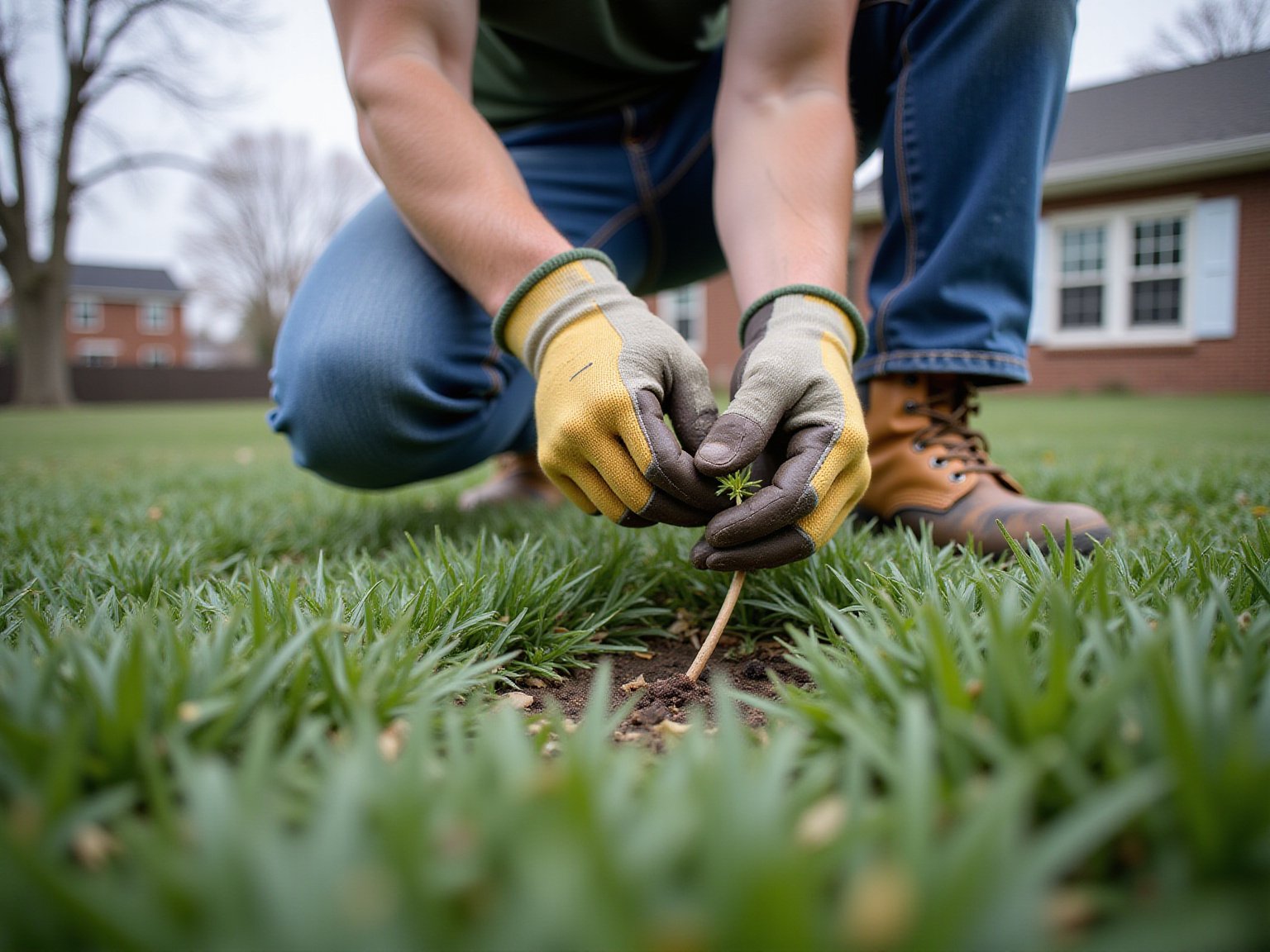
Hand-pulling remains one of the most effective methods for isolated weeds, especially when soil is moist[4]. Remove the entire root system to prevent regrowth. For larger infestations, consider using a long-handled weeding tool to reduce back strain.
Cultural Practices
Maintaining thick, healthy grass is your best defense against weeds[5]. Mow at the highest recommended setting for your grass type - taller grass shades out weed seedlings and develops deeper roots.
Fertilize appropriately based on soil test results. Over-fertilization can actually encourage certain weeds, while under-fertilized grass struggles to compete.
Organic Alternatives
Corn gluten meal serves as a natural pre-emergent, though it's less effective than synthetic options[4]. Vinegar-based herbicides can burn down small weeds but may require multiple applications.
Beneficial microorganisms in compost help suppress certain soil-borne weed seeds while improving overall soil health.
Seasonal Timing Strategy
Spring Applications
Apply pre-emergent herbicides when forsythia begins blooming - a reliable indicator that soil temperatures are warming[2]. Target cool-season weeds like chickweed and henbit with post-emergent treatments in early spring.
Summer Management
Focus on spot-treating perennial weeds during active growth periods. Avoid broadcast applications during heat stress periods when temperatures exceed 85°F.
Fall Opportunities
Fall applications of broadleaf herbicides are often more effective than spring treatments[1]. Weeds are actively moving nutrients to roots, carrying herbicides throughout their systems.
Apply a second pre-emergent treatment in late summer to prevent winter annual weeds like annual bluegrass.
Conclusion
Successful weed control requires combining multiple methods and timing applications correctly. Start with pre-emergent herbicides in early spring, maintain cultural practices throughout the growing season, and use targeted post-emergent treatments as needed. Keep detailed records of what you apply and when - this information helps you refine your strategy each year. Remember that building a thick, healthy lawn through proper fertilization and watering practices is ultimately your most effective long-term weed control method.
Sources
- University of Minnesota Extension - Lawn weed control timing and application guidelines
2. Michigan State University Extension - Crabgrass prevention and pre-emergent herbicide research
3. Environmental Protection Agency - Pesticide safety guidelines for homeowners
4. University of California Agriculture and Natural Resources - Integrated pest management for home landscapes
5. Purdue University Turfgrass Science - Cultural practices for weed prevention in home lawns