
Quick Answer
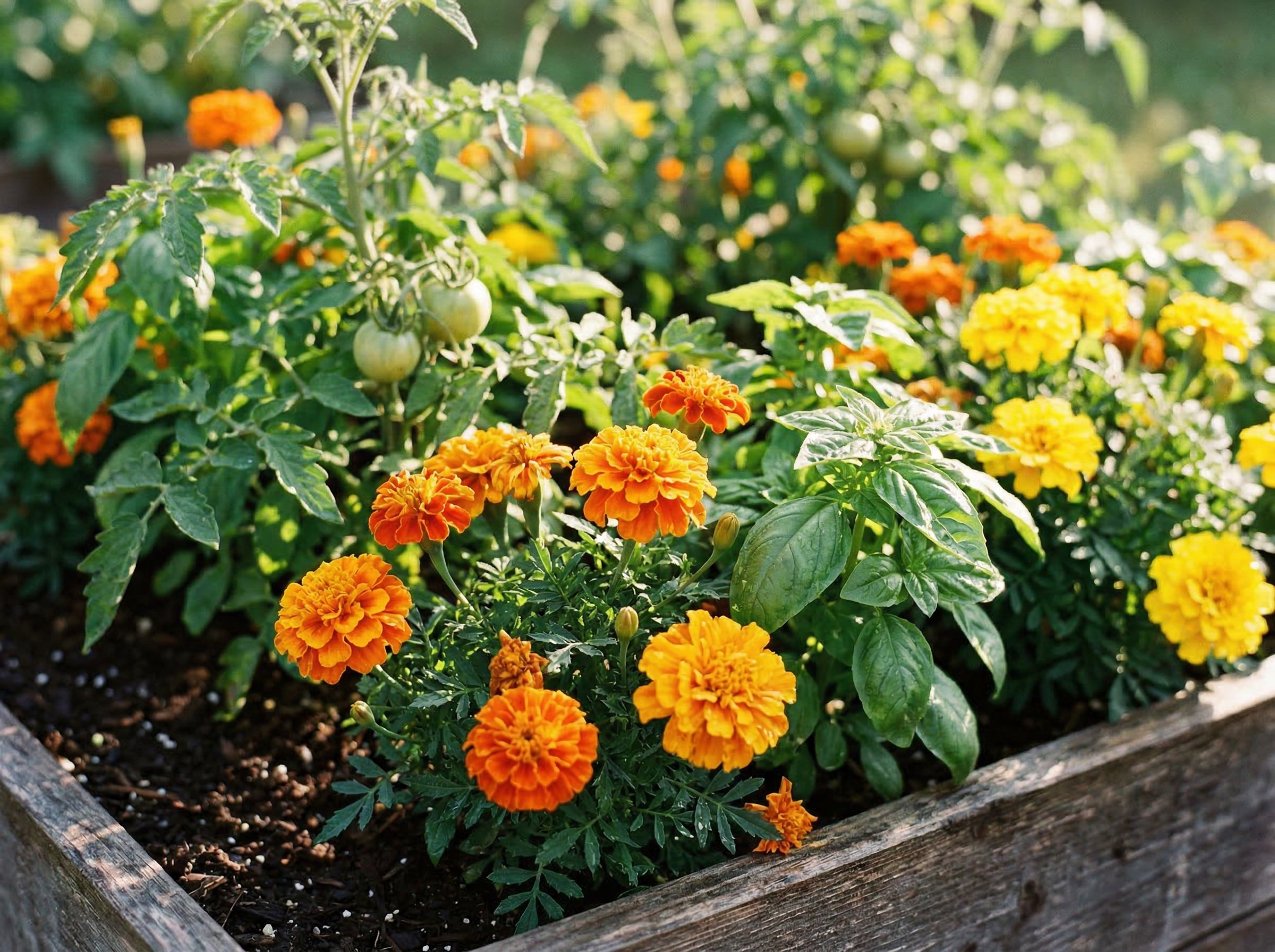
The best companion plants for marigolds are tomatoes, basil, cucumbers, roses, and peppers. These plants benefit from the marigold's natural pest-repelling properties and nematode-suppressing root chemistry without competing for resources [1]. On the flip side, you should always keep marigolds away from beans and fennel, which have negative biochemical interactions with them.
Key Takeaways
- Tomatoes and marigolds are a powerhouse duo: University research confirms marigolds reduce thrips on tomato plants in both field and greenhouse settings, while also suppressing damaging root-knot nematodes in the soil.
- Basil amplifies the benefits: Planting basil alongside marigolds and tomatoes creates a triple-threat pest barrier with overlapping insect-repelling scents.
- French marigolds offer the strongest protection: French marigold cultivars (Tagetes patula) are the most effective species against the widest range of nematodes according to the University of Florida IFAS Extension.
- Beans and fennel are bad neighbors: Both plants have allelopathic conflicts with marigolds that can stunt growth and reduce yields for everyone involved.
- Timing matters for nematode control: Marigolds should be planted at least two months before your desired vegetable crop to give the roots enough time to suppress nematode populations in the soil.
What Are the Best Companion Plants for Marigolds?
If you are planning your spring garden and looking for the best companion plants for marigolds, you are in luck. Marigolds are some of the friendliest plants in the garden. Their bright blooms attract pollinators, their pungent foliage deters browsing deer and rabbits, and their roots wage a quiet chemical war against soil-dwelling pests [3]. Here are the top companions that pair beautifully with them.
Tomatoes are the classic marigold companion, and for good reason. Research from the University of Minnesota Extension found that basil and marigolds can be effective at reducing thrip populations in tomatoes under both field and greenhouse conditions [2]. Thrips are tiny insects that scar tomato fruit and spread diseases like tomato spotted wilt virus, so having a natural deterrent right next to your plants is a serious advantage. Beyond pest control, marigold roots release alpha-terthienyl into the soil, which suppresses the root-knot nematodes that love to attack tomato root systems. Plant your marigolds 8 to 12 inches from the base of your tomato plants, ideally in a ring or border pattern that maximizes root zone overlap.
Basil is the perfect third member of this planting trio. Its own strong aroma adds another layer of confusion for pest insects trying to locate their host plants by scent. Basil may also promote tomato growth when planted nearby, according to the same University of Minnesota research [2]. Tuck basil plants between your marigolds and tomatoes, spacing them about 10 to 12 inches apart. Both basil and marigolds love full sun and well-drained soil, so they share the same growing conditions without any conflict.
Cucumbers are another excellent marigold companion. Cucumber beetles are a persistent headache for gardeners, chewing on leaves, scarring fruit, and spreading bacterial wilt. Marigolds help by repelling these beetles and simultaneously attracting beneficial pollinators like honeybees and butterflies that cucumbers desperately need for fruit set [3]. Plant a row of French marigolds along the edge of your cucumber patch, or intersperse them every 18 to 24 inches along a trellis row. The marigolds will stay compact enough not to shade your cucumber vines while providing continuous pest deterrence throughout the growing season.
Roses might seem like an unusual companion for the humble marigold, but experienced rose gardeners have relied on this pairing for decades. Marigolds planted at the base of rose bushes help deter aphids, one of the most common and frustrating rose pests. The strong scent of marigold foliage masks the attractive fragrance of roses, making it harder for aphids to zero in on their target. For rose beds, choose dwarf French marigold varieties like 'Petite' or 'Dwarf Primrose' that stay under 12 inches tall. Space them 8 to 10 inches from the base of each rose bush in a loose border. They will add a bright pop of color at ground level while your roses bloom above.
Peppers and squash round out the list of excellent marigold companions. Both crops suffer from the same root-knot nematodes that plague tomatoes, and both benefit from the insect-repelling properties of marigold foliage. The University of Missouri notes that the strongly aromatic foliage of marigolds is widely credited with repelling insect pests from neighboring plants [3]. Plant marigolds at the ends of your pepper rows or as a border around squash hills to create a fragrant, pest-deterring perimeter.
Which Plants Should You Avoid Planting Near Marigolds?
Not every plant appreciates having marigolds as a neighbor. A few common garden plants have genuine biochemical conflicts with marigolds, and planting them together can reduce yields or stunt growth for one or both parties.
Fennel is the most notorious bad companion for marigolds and, frankly, for almost everything else in the garden. Fennel produces allelopathic compounds, chemicals released from its roots and fallen foliage that actively inhibit the germination and growth of surrounding plants. These compounds affect marigolds just as readily as they affect tomatoes, beans, and most other garden crops. The best advice is simple: give fennel its own isolated spot at the far edge of your garden, or grow it in a container, and keep it well away from your marigold plantings.
Beans, including both bush beans and pole beans, are another poor match. Bean plants are legumes that form symbiotic relationships with nitrogen-fixing bacteria in the soil. The biochemical compounds that marigold roots release, specifically the thiophenes including alpha-terthienyl, can interfere with these delicate soil microbial relationships. The result is that beans planted too close to marigolds often show reduced nitrogen fixation and slower growth. Keep at least 3 to 4 feet of separation between your marigold borders and your bean rows to avoid any negative interaction.
Brassicas like cabbage and broccoli can also be tricky companions. While some research from the University of Minnesota suggests that marigolds, onions, and nasturtiums helped reduce cabbage looper and imported cabbageworm damage in cabbage [2], the evidence is mixed. If you do try this combination, monitor carefully and be prepared to use additional pest management strategies. The more reliable approach is pairing brassicas with aromatic herbs like sage and thyme, which have stronger research backing for reducing diamondback moths on brussels sprouts.
How Do Marigold Roots Repel Nematodes?
This is where marigolds truly set themselves apart from every other companion plant in the garden. The pest-repelling scent of their foliage is helpful, but the real superpower lives underground in their roots.
Marigold roots produce and release a compound called alpha-terthienyl into the surrounding soil. According to the University of Florida IFAS Extension, alpha-terthienyl is "one of the most toxic naturally occurring compounds" to nematodes ever identified [1]. This chemical works by penetrating the outer skin of root-knot nematodes and inducing severe oxidative stress, essentially destroying the nematode from the outside in. It also inhibits the hatching of nematode eggs already present in the soil, breaking the pest's life cycle over time.
French marigold cultivars (Tagetes patula) are the most effective species for nematode suppression. The University of Florida specifically recommends varieties like 'Single Gold,' 'Tangerine,' 'Petite,' and 'Dwarf Primrose' for this purpose [1]. African marigolds (Tagetes erecta) also have some nematode-suppressing ability, but French marigolds work against a wider range of nematode species. One important note: avoid signet marigolds (Tagetes tenuifolia) such as 'Golden Gem' and 'Tangerine Gem,' which are actually susceptible to nematodes rather than suppressive.
For maximum nematode control, planting density and timing are critical. The IFAS Extension recommends planting marigolds less than 7 inches apart and growing them for at least two full months before planting your desired vegetable crop in the same soil [1]. The alpha-terthienyl compound is only released by living, actively growing roots, meaning you cannot simply till marigold plants into the soil and expect the same benefit. You also need to replant marigolds each season because the suppressive effect does not carry over permanently from year to year. Think of it as a living, renewable form of biological pest control that requires some planning but delivers results without any synthetic chemicals.
The University of Hawaii CTAHR has studied marigolds as a practical alternative to chemical nematicides in agricultural settings, confirming that this approach scales from backyard gardens to small commercial farms [4]. For home gardeners, the simplest strategy is to plant a dense cover of French marigolds in any bed where you plan to grow nematode-susceptible crops like tomatoes, peppers, or cucumbers later in the season.
Frequently Asked Questions
What vegetables grow best next to marigolds?
Tomatoes, cucumbers, peppers, squash, and eggplant all thrive when planted near marigolds. The marigolds suppress root-knot nematodes in the soil and their strong scent helps repel aphids, whiteflies, and thrips that commonly attack these vegetable crops.
Do marigolds really repel pests from the garden?
Yes, but with some nuance. Research from the University of Minnesota confirms that marigolds effectively reduce thrips on tomatoes in both field and greenhouse conditions. Their aromatic foliage also deters deer and rabbits. However, not all pest-repelling claims are equally supported by science, so results can vary.
How close should I plant marigolds to other plants?
For nematode suppression, plant marigolds less than 7 inches apart according to the University of Florida IFAS Extension. For general companion planting in a vegetable garden, spacing marigolds 8 to 12 inches from neighboring crops gives both plants enough room to grow without competing for sunlight or nutrients.
Can I plant marigolds near beans or fennel?
It is best to keep marigolds away from beans and fennel. Beans are sensitive to the biochemical compounds released by marigold roots, which can stunt their growth. Fennel produces its own allelopathic chemicals that inhibit the growth of most nearby plants, including marigolds, making them poor garden neighbors.
TLDR
The best companion plants for marigolds include tomatoes, basil, cucumbers, roses, and peppers, while beans and fennel should be kept far away because their biochemistry clashes with marigolds.
Sources:
1 University of Florida IFAS Extension - Marigolds for Nematode Management
2 University of Minnesota Extension - Companion Planting in Home Gardens
3 University of Missouri Integrated Pest Management - Marigold
4 University of Hawaii CTAHR - Using Marigold as an Alternative to Chemical Nematicides