Quick Answer
Ohio lawns face unique challenges due to the state's continental climate and cool-season grass dominance. The most common problems include white grub damage, brown patch disease during humid summers, and persistent crabgrass invasions that exploit Ohio's spring temperature fluctuations[1]. Success requires timing treatments to Ohio's specific growing seasons and understanding how the state's moderate to high humidity affects disease development.
Key Takeaways
- White grubs peak in late summer and require preventive treatment in May-June for Ohio's clay soils
- Brown patch thrives in Ohio's humid summers when temperatures exceed 80°F with high moisture
- Crabgrass prevention must align with forsythia blooming (typically April) in zones 5b-6b
- Cool-season grasses like Kentucky bluegrass and tall fescue dominate but struggle during Ohio's hot, humid summers
- Proper fall overseeding in September takes advantage of Ohio's ideal cool-season growing conditions
Ohio's continental climate creates a perfect storm of lawn care challenges. With cold winters dropping to 20°F and humid summers reaching 84°F, plus 39 inches of annual rainfall, Ohio homeowners must navigate temperature swings that stress cool-season grasses while creating ideal conditions for pests and diseases[2].
What Are the Most Damaging Pests in Ohio Lawns?
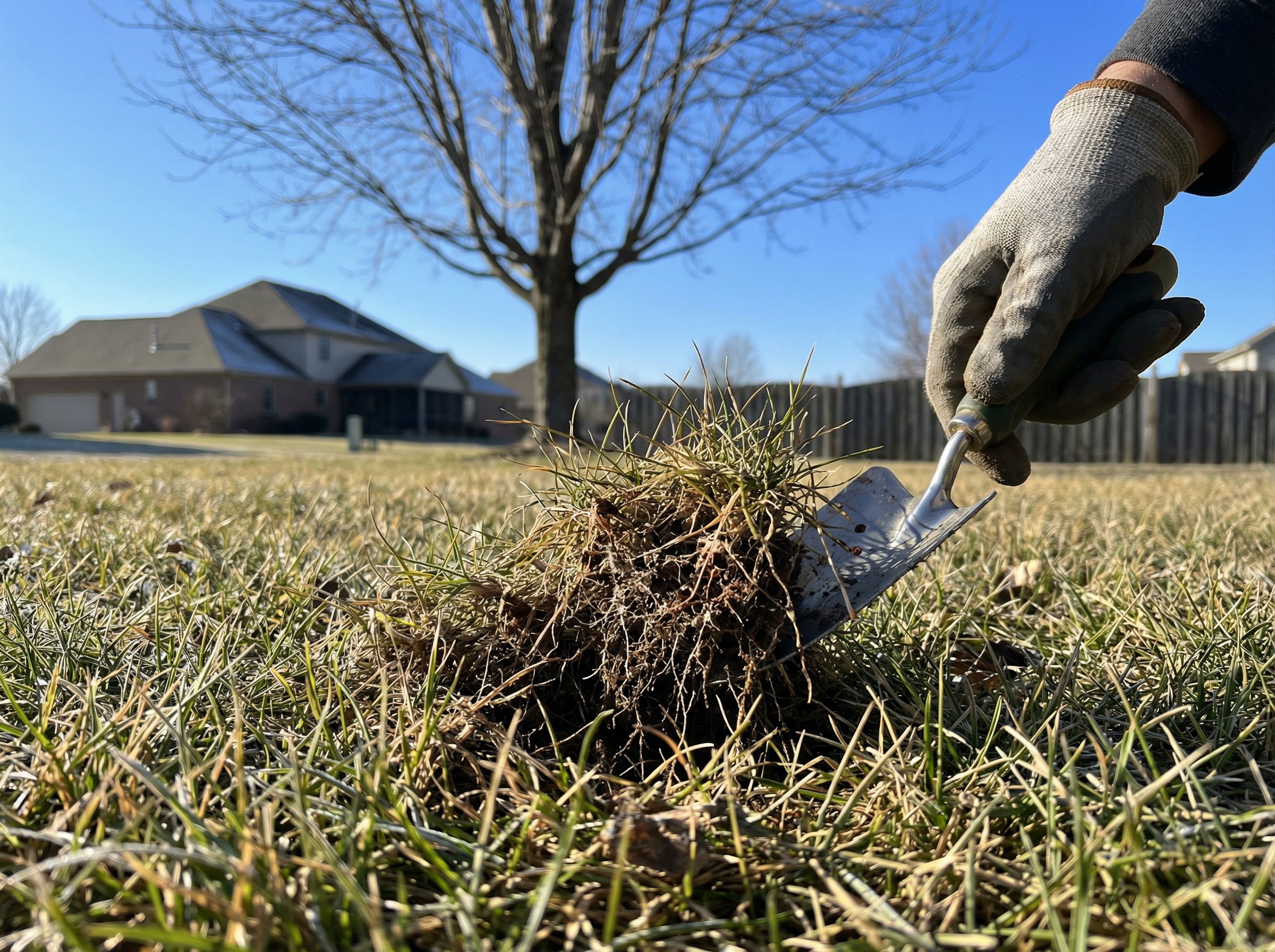
White grubs top the list of destructive Ohio lawn pests, with peak damage occurring from late July through September. These beetle larvae feed on grass roots, creating brown patches that peel back like carpet[1]. Ohio's clay-heavy soils retain moisture that attracts egg-laying beetles, making preventive treatment essential.
Sod webworms present another significant threat, particularly to Ohio's popular Kentucky bluegrass lawns. These caterpillars create small brown spots that expand rapidly during Ohio's warm summer months. Chinch bugs concentrate along sidewalks and driveways, thriving in the heat-stressed areas common during Ohio summers[3].
Billbugs target tall fescue, another common Ohio grass, by laying eggs in stems and creating characteristic "sawdust" frass. Treatment timing proves critical—apply preventive grub control in May when soil temperatures reach 60°F consistently, typically coinciding with when local nurseries plant warm-season annuals.
Which Diseases Plague Ohio's Cool-Season Grasses?
Brown patch dominates Ohio's summer disease problems, thriving when nighttime temperatures exceed 70°F combined with high humidity—conditions common throughout Ohio's summer months[4]. This fungal disease creates circular brown patches that can expand rapidly during Ohio's muggy July and August weather.
Dollar spot affects all of Ohio's common grass types but particularly targets Kentucky bluegrass and fine fescue during periods of high humidity and moderate temperatures. The disease creates silver-dollar-sized brown spots that merge into larger damaged areas.
Necrotic ring spot poses a serious threat to Ohio's Kentucky bluegrass lawns, creating distinctive "frog-eye" patterns of dead grass with green centers. This disease often appears during stress periods following Ohio's hot summers[1].
Snow mold becomes problematic in northern Ohio, especially near Lake Erie where lake-effect snow creates prolonged snow cover. Both gray and pink snow mold can damage lawns that weren't properly prepared for Ohio's winter dormancy period.
How Do I Control Ohio's Most Persistent Weeds?
Crabgrass remains Ohio's number one weed enemy, germinating when soil temperatures reach 55°F for several consecutive days—typically when forsythia blooms in April throughout Ohio[5]. Pre-emergent herbicide application must occur before this critical temperature threshold.
Dandelions thrive in Ohio's clay soils, developing deep taproots that exploit the state's spring moisture. Post-emergent broadleaf herbicide works best during Ohio's fall growing season (September-October) when dandelions transfer energy to roots.
Creeping Charlie (ground ivy) flourishes in Ohio's shaded, moist areas, spreading aggressively through lawns weakened by summer stress. This perennial weed requires multiple treatments timed with Ohio's active growing periods in spring and fall.
White clover indicates nitrogen-deficient soils common in Ohio lawns. While some homeowners embrace clover for its drought tolerance, regular fertilization following Ohio State University Extension recommendations typically reduces clover establishment[1].
When Should I Address These Problems in Ohio?
Timing treatments to Ohio's specific climate zones (5b-6b) maximizes effectiveness while minimizing lawn stress. Apply pre-emergent crabgrass control in early April, coinciding with forsythia blooming and consistent soil temperatures above 50°F.
Grub prevention requires May-June application when adult beetles lay eggs. Ohio's soil typically reaches the critical 60°F threshold by mid-May, making this the optimal treatment window[6].
Disease prevention starts with proper cultural practices timed to Ohio's growing seasons. Overseed thin areas in September when Ohio's cooling temperatures favor cool-season grass establishment. Aerate compacted soils in early fall (September-October) to improve drainage and reduce disease pressure.
Fertize according to Ohio's extended growing season, with applications from April through November. Ohio State University Extension recommends soil testing every 3-4 years to determine specific nutrient needs for Ohio's varied soil conditions.
Taking Action on Ohio Lawn Problems
Successful Ohio lawn care requires understanding the state's unique climate challenges and timing treatments accordingly. Focus on preventive measures during Ohio's distinct seasonal transitions, particularly the critical spring pre-emergent window and fall renovation period.
Start with a soil test through Ohio State University Extension to identify specific deficiencies. Develop a treatment calendar based on Ohio's growing zones rather than generic recommendations. Most importantly, maintain proper cultural practices—adequate watering, correct mowing height, and appropriate fertilization—to help your cool-season grass withstand Ohio's challenging summer conditions.
Sources
- Ohio State University Extension - Lawn Care and Turfgrass Management Resources
2. USDA Natural Resources Conservation Service - Ohio Climate and Soil Data
3. Michigan State University Extension - Cool-Season Turfgrass Pest Management
4. Penn State Extension - Turfgrass Disease Management in Cool Climates
5. University of Illinois Extension - Weed Control in Cool-Season Lawns
6. Professional Lawn Care Association of America - Regional Pest Management Guidelines