
Quick Answer
Illinois homeowners face unique lawn challenges due to the state's continental climate and cool-season grass dominance. The most common problems include white grubs damaging Kentucky bluegrass roots, brown patch disease thriving in humid summers, and persistent weeds like crabgrass and creeping Charlie taking advantage of stressed turf.
Key Takeaways
- White grubs are the #1 pest problem for Illinois lawns, peaking in late summer
- Brown patch disease strikes during hot, humid periods (July-August) in zones 5a-7a
- Crabgrass prevention requires pre-emergent application when soil reaches 55°F in April
- Cool-season grasses struggle most during Illinois's hot, humid summers
- Proper fall care (September-October) prevents many spring lawn problems
Illinois's continental climate creates a perfect storm of lawn challenges. With cold winters dropping to 18°F and hot, humid summers reaching 85°F, cool-season grasses like Kentucky bluegrass and tall fescue face year-round stress[1]. The state's moderate to high summer humidity and 37 inches of annual rainfall create ideal conditions for diseases and pests that plague Prairie State lawns.
What Are the Most Damaging Pests in Illinois Lawns?
White grubs top the list of destructive lawn pests across Illinois's USDA zones 5a-7a. These beetle larvae feed on grass roots from late summer through fall, causing brown patches that easily pull up like loose carpet[2]. Japanese beetle grubs are particularly problematic, with adult beetles laying eggs in July that hatch into root-destroying larvae.
Sod webworms create another major headache for Illinois homeowners. These moth larvae chew grass blades at night during summer months, leaving irregular brown spots throughout Kentucky bluegrass and perennial ryegrass lawns[1]. Look for small moths flying in zigzag patterns over your lawn at dusk—a telltale sign of webworm activity.
Chinch bugs thrive in Illinois's hot, dry conditions, particularly affecting tall fescue and fine fescue. These tiny insects suck plant juices and inject toxins, creating yellowish patches that spread outward. Billbugs add to the pest pressure by boring into grass stems, with their larvae feeding on roots and crowns.
Which Diseases Most Commonly Affect Illinois Grass?
Brown patch disease dominates Illinois lawn problems during the state's humid summer months. This fungal disease particularly targets Kentucky bluegrass, creating circular brown patches 6 inches to several feet wide[3]. The combination of nighttime temperatures above 68°F, high humidity, and poor air circulation creates perfect brown patch conditions.
Dollar spot appears as small, silver dollar-sized brown spots scattered across lawns. This disease strikes when nights are cool and humid, particularly affecting fine fescue and perennial ryegrass during Illinois's variable spring and fall weather[1].
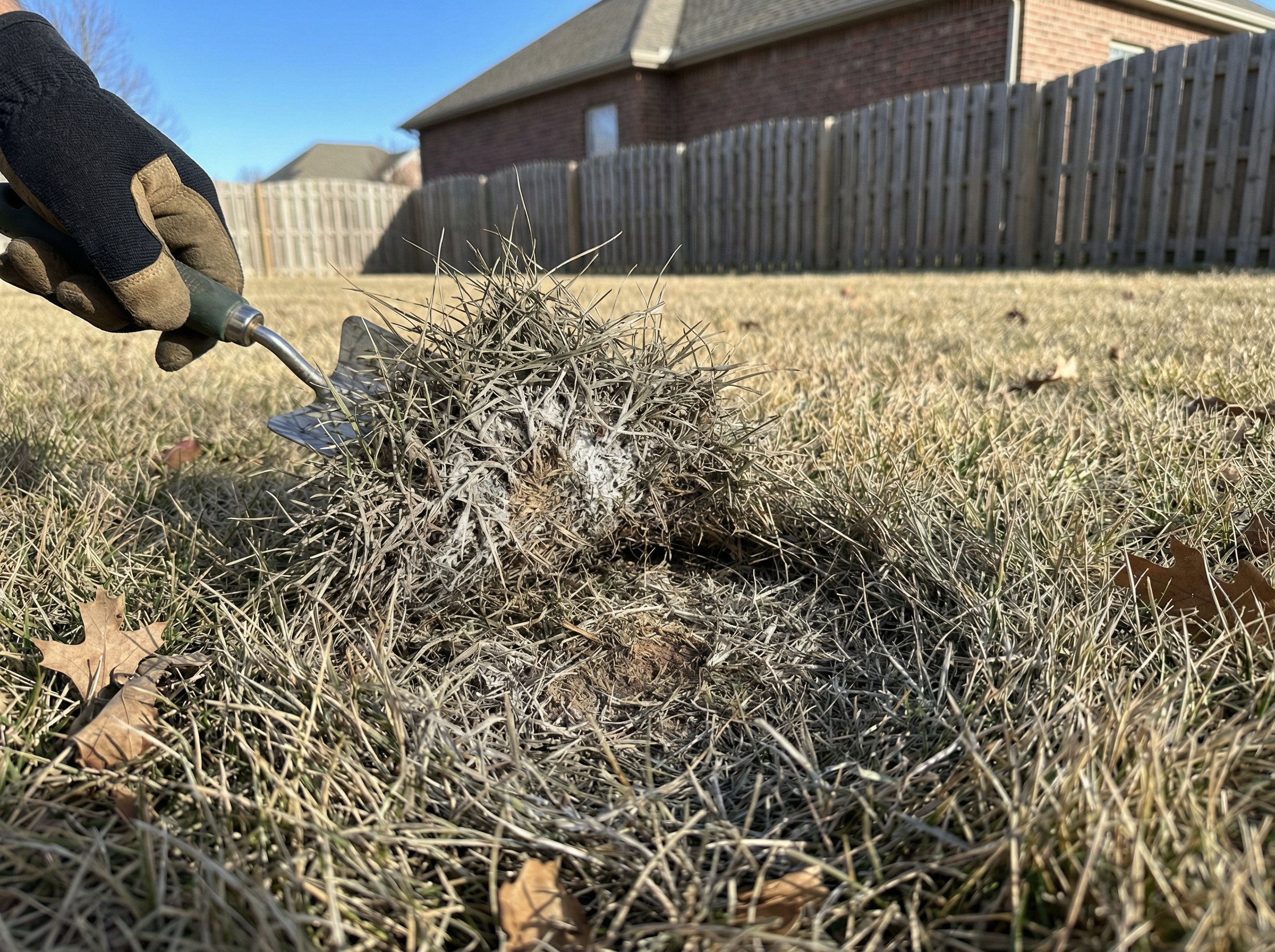
Snow mold becomes visible as snow melts in late winter, revealing circular patches of matted, grayish-white grass. Illinois's long dormancy period from December through March, combined with snow cover, creates ideal conditions for both gray and pink snow mold development[4].
Rust disease gives grass blades an orange or reddish appearance, particularly affecting perennial ryegrass during cool, moist periods. Necrotic ring spot creates dead rings in Kentucky bluegrass lawns, especially during stress periods when temperatures fluctuate.
What Weeds Cause the Biggest Problems for Illinois Homeowners?
Crabgrass ranks as Illinois's most persistent weed problem. This annual grass germinates when soil temperatures reach 55°F, typically in mid-April across most of the state[5]. Without pre-emergent herbicide application, crabgrass quickly spreads through thin or stressed cool-season grass areas.
Creeping Charlie (ground ivy) thrives in Illinois's moist, shaded areas where grass struggles. This perennial weed spreads rapidly through stolons, creating dense mats that choke out Kentucky bluegrass and fine fescue. Its purple flowers appear in early spring, making identification easy.
Dandelions emerge early in Illinois springs, taking advantage of dormant grass. Their deep taproots make them drought-tolerant and difficult to control once established[1]. White clover indicates nitrogen-poor soils and spreads quickly in thin lawn areas.
Henbit appears as a winter annual, germinating in fall and becoming visible as snow melts. This mint family weed produces purple flowers in early spring before grass begins active growth.
How Can Illinois Homeowners Prevent Common Lawn Problems?
Timing is everything in Illinois lawn care. Apply pre-emergent herbicides in early April when soil temperatures consistently reach 55°F to prevent crabgrass germination[6]. This timing varies slightly across the state's zones but generally occurs around tax day.
Core aeration in September-October addresses soil compaction that contributes to many lawn problems. Illinois's clay soils and prairie winds create challenging growing conditions that benefit from annual aeration during peak cool-season grass growth periods[1].
Proper fertilization supports grass health against pest and disease pressure. Apply nitrogen fertilizer from May through November, with a winterizer application in late fall before dormancy. Avoid excessive nitrogen during hot summer months, which promotes brown patch development.
Overseeding thin areas in late August through mid-September helps crowd out weeds and creates dense turf that resists pest damage. Choose grass varieties suited to your specific area—Kentucky bluegrass for sun, fine fescue for shade, and tall fescue for high-traffic areas.
Conclusion
Illinois lawn problems stem largely from the state's challenging climate and cool-season grass requirements. Focus your efforts on fall lawn care—September and October represent the most critical months for preventing next year's problems. Apply pre-emergent herbicides in April, maintain proper mowing heights during summer stress periods, and address pest issues early when treatments are most effective. With proper timing and Illinois-specific care, your cool-season grass can thrive despite the Prairie State's unique challenges.
Sources
- University of Illinois Extension - Illinois lawn care and turfgrass management
2. Iowa State University Extension - White grub identification and control in Midwest lawns
3. Purdue University Extension - Brown patch and summer lawn diseases in cool-season grasses
4. Michigan State University Extension - Snow mold diseases in northern climates
5. USDA Natural Resources Conservation Service - Crabgrass biology and management
6. Professional Lawn Care Association of America - Pre-emergent herbicide timing guidelines
