Quick Answer
Fall overseeding should be done 6-8 weeks before your first hard frost, typically between late August and mid-October depending on your region[1]. The process involves preparing your existing lawn through dethatching or aeration, selecting the right seed type for your grass variety, and maintaining consistent moisture for 2-3 weeks after seeding[2].
Key Takeaways
- Time overseeding 6-8 weeks before first frost for optimal germination
- Cool-season grasses benefit most from fall overseeding due to ideal growing conditions
- Proper soil preparation through aeration or dethatching is crucial for seed-to-soil contact
- Consistent watering for 2-3 weeks ensures successful germination
- Fall overseeding produces stronger root systems than spring seeding
Fall presents the perfect window for lawn overseeding, offering cooler temperatures, increased rainfall, and reduced weed competition. This comprehensive guide will walk you through the entire process to achieve a thicker, healthier lawn next spring.
Why Fall is Ideal for Overseeding
Fall overseeding takes advantage of nature's perfect growing conditions. Cool-season grasses like fescue, bluegrass, and ryegrass thrive in temperatures between 60-75°F, which fall provides consistently[1]. The cooler weather reduces stress on both existing grass and new seedlings.
Moisture levels naturally increase during fall months, reducing your irrigation needs. Additionally, most weeds go dormant in fall, giving your new grass seedlings less competition for nutrients and space[3]. This combination creates ideal conditions for strong root development before winter dormancy.
Step-by-Step Overseeding Process
Timing Your Project
Start overseeding 6-8 weeks before your area's average first hard frost date[1]. For most northern regions, this means late August through September. Southern areas can extend into October. Check your local extension office for specific frost dates in your zip code.
Lawn Preparation
Begin by mowing your existing lawn shorter than usual - about 2 inches high. This allows better seed-to-soil contact and reduces competition from existing grass[2]. Remove any debris, leaves, or thick thatch buildup.
Core aeration is the most effective preparation method for overseeding. Rent a core aerator to create holes 2-3 inches deep throughout your lawn[4]. If aeration isn't possible, light dethatching with a power rake will also improve seed contact with soil.
Seed Selection and Application
Choose grass seed that matches your existing lawn type or select a blend suitable for your climate zone[3]. Apply seed at half the rate recommended for new lawns - typically 2-4 pounds per 1,000 square feet for most cool-season varieties.
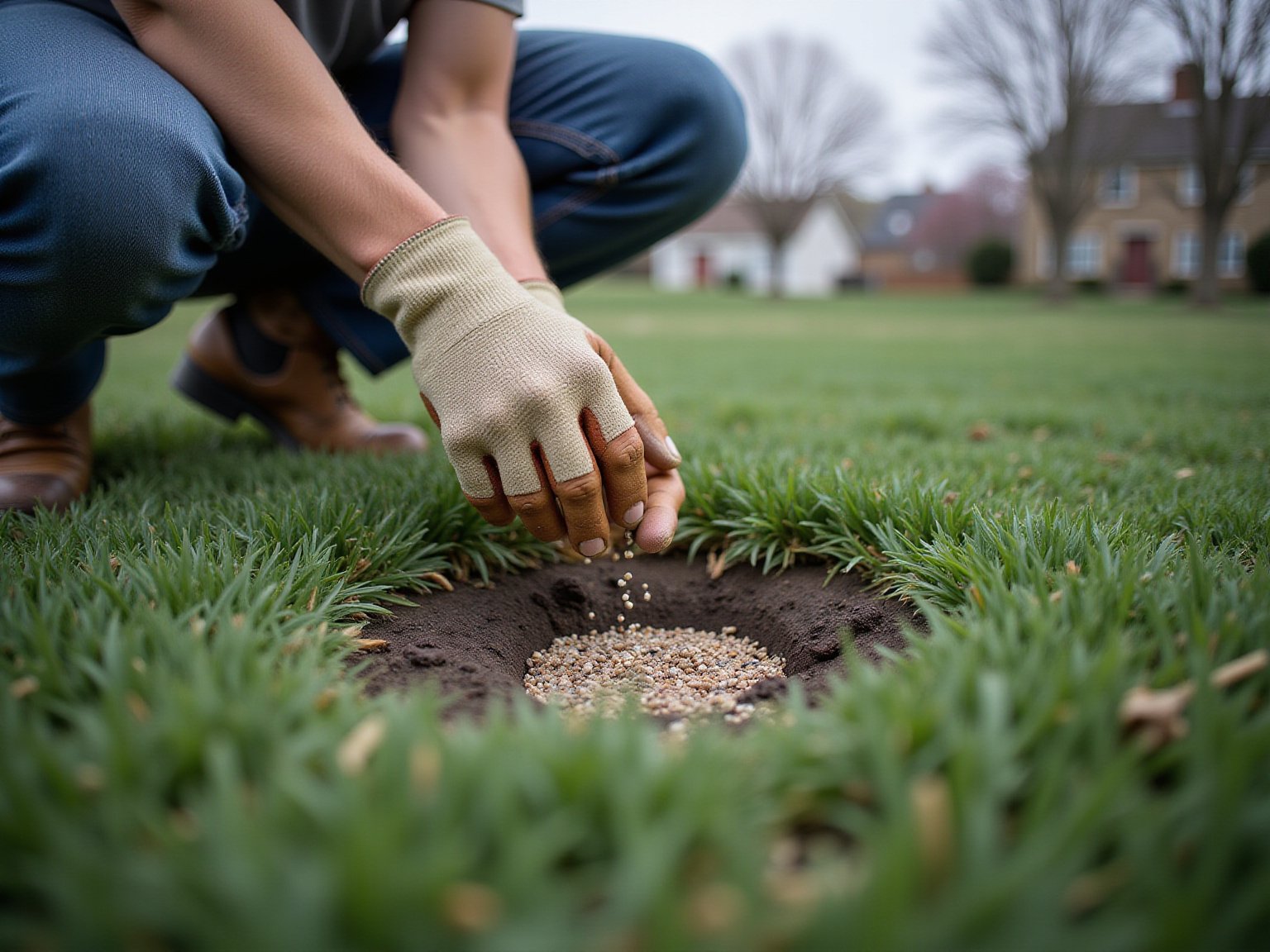
Use a broadcast spreader for even distribution, applying seed in two perpendicular passes. Lightly rake the area afterward to ensure good seed-to-soil contact without burying seeds too deeply[2].
Post-Seeding Care
Watering Schedule
Maintain consistent soil moisture for the first 2-3 weeks after seeding. Water lightly 2-3 times daily rather than deep, infrequent watering[5]. The soil surface should remain moist but not waterlogged. Once seedlings reach 1 inch tall, transition to deeper, less frequent watering.
First Mowing and Fertilization
Wait until new grass reaches 3-4 inches before the first mowing, typically 3-4 weeks after germination[4]. Set your mower blade high and ensure it's sharp to avoid pulling up young seedlings.
Apply a starter fertilizer high in phosphorus at seeding time to promote root development[5]. Avoid applying pre-emergent herbicides for at least 8-10 weeks after overseeding, as these will prevent your new grass from establishing.
Common Overseeding Mistakes to Avoid
Many homeowners apply too much seed, thinking more is better. Overcrowding actually reduces germination rates and creates weak, spindly grass[3]. Stick to recommended seeding rates for best results.
Inconsistent watering is another major cause of overseeding failure. New seeds require constant moisture until germination occurs. Set up a simple irrigation schedule or use sprinkler timers to maintain consistency[2].
Avoid walking on newly seeded areas for at least 3-4 weeks. The combination of soft, moist soil and fragile seedlings makes lawns particularly vulnerable to damage during this period[4].
Conclusion
Successful fall overseeding requires proper timing, thorough preparation, and consistent follow-up care. Start your project 6-8 weeks before frost, prepare your soil through aeration, choose appropriate seed varieties, and maintain steady moisture levels for optimal results. With these steps, you'll enjoy a thicker, healthier lawn that's better equipped to handle next year's growing challenges. Begin planning your overseeding project now to take advantage of fall's ideal growing conditions.
Sources
- Penn State Extension - Turfgrass overseeding timing and techniques
2. University of Minnesota Extension - Lawn establishment and renovation practices
3. Scotts Miracle-Gro - Professional lawn care research and seed selection guides
4. Michigan State University Extension - Turfgrass management and maintenance protocols
5. USDA Natural Resources Conservation Service - Soil and water management for turfgrass establishment
Related: Looking for a step-by-step lawn transformation process? See our Complete Fall Overseeding Transformation Guide.